Unlocking the Secrets of Fly Fishing: The Importance of Reading the Water

Fly fishing offers more than just a chance to catch fish. It invites anglers to connect deeply with nature, understand aquatic ecosystems, and sharpen their observation skills. One of the most valuable skills in fly fishing is learning how to read the water. This ability transforms a casual fishing trip into a successful and rewarding experience.
Understanding the water means knowing where fish are likely to be, how they behave, and what conditions influence their feeding patterns. Without this knowledge, even the best casting techniques and fly selections might fall short. This post explores why reading the water is essential, how to develop this skill, and practical tips to apply on your next fishing adventure.
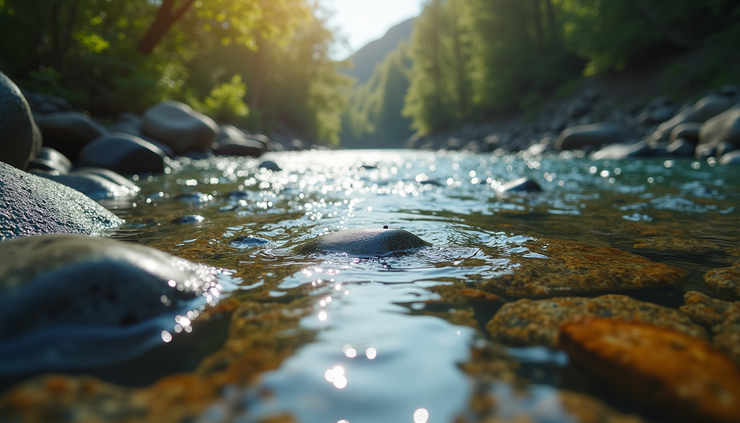
Why Reading the Water Matters in Fly Fishing
Fish do not randomly swim in the water. They seek specific conditions that provide food, shelter, and safety. By reading the water, anglers can identify these spots and increase their chances of catching fish.
Locating Feeding Zones
Fish often feed in areas where food is abundant. These include riffles, pools, and seams where currents meet. Recognizing these zones helps anglers present their flies where fish are actively feeding.
Understanding Fish Behavior
Water temperature, flow speed, and underwater structures influence fish behavior. Reading these factors allows anglers to predict when and where fish will strike.
Improving Fly Presentation
Knowing the water’s movement helps in casting the fly naturally. A well-presented fly mimics real insects, increasing the likelihood of a bite.
Key Water Features to Observe
To read the water effectively, focus on these main features:
Currents and Flow
Fish use currents to conserve energy while waiting for food to drift by. Look for:
Riffles: Shallow, fast-moving water with bubbles and ripples. Insects hatch here, attracting fish.
Pools: Deeper, slower water where fish rest between feeding.
Seams: Boundaries between fast and slow water where food accumulates.
UNDERCUT BANKS. A stream or river erodes softer soil layers while the hard-packed top layers—often held together by grass, roots, or other vegetation—remain intact. The result is an undercut bank: a trout hotel favored by big fish. They hide from the sun and overhead predators and occasionally dart out into the current to grab grasshoppers, stonefly nymphs, or prey fish.
It’s challenging to get at these fish from directly above, since when you walk on the undercut bank, fish can detect your footstep vibrations, and they may spook or develop lockjaw. The best way to present a fly to fish holding under an undercut bank is to wade from the opposite shore or, in a larger river, to drift in a boat and cast as close to the undercut as possible.
Whether you are fishing nymphs or streamers, try not to retrieve the fly away from the undercut too quickly. Dead-drift the fly alongside the undercut, or retrieve it upstream or downstream parallel to the undercut to expose the fly to as much of the undercut for as long as possible. You don’t know precisely where the big trout are holding, and sometimes an undercut can run for a hundred feet or more.
OVERHANGING VEGETATION. Overhanging tree branches and shrubs provide cover from airborne predators and, as a bonus, they frequently drop terrestrials such as ants, beetles, and inchworms into the water, so consider using these types of fly patterns. If the branches are over the water—but not in the water—it’s often possible to cast a dry fly upstream and drift it right under the branches. You can also do this with wet flies, such as nymphs and streamers, cast upstream of the tree limbs, and drift the fly under the branches where you suspect the fish may be holding.
If the branches are dragging in the water, getting your flies to the fish is more difficult. Dry flies usually won’t work unless you approach from downstream and cast as closely behind the branches as possible. Sometimes you can still drift wet flies under the dragging limbs, especially if they are only partially submerged, and you cast well upstream, allowing plenty of time for the flies to sink.
BACK-EDDY. The current in a back eddy is circular. Near shore, the current often moves in the opposite direction of the primary current, and fish facing the current are facing the “wrong” direction in relation to the rest of the fish in the river. It can be challenging to get a dead drift in a circular back-eddy, but the rewards are tremendous: Back-eddies can hold enormous numbers of fish, especially in fertile spring creeks and large tail-waters.
BEHIND A ROCK. A large midstream boulder is a frequent feeding spot for trout because the rock provides a strong current flowing from both sides and a sheltered place to sit and watch for food.
To catch trout directly behind the rock, cast your fly upstream of the rock and allow it to drift in the current to one side of the rock or the other, just as a natural food item would. Sometimes trout hold well downstream of the rock. In these cases, you can cast behind the rock and drift your flies down the current seam until the seam disappears.
IN FRONT OF A ROCK. When flowing water hits the front of a rock, it pauses for an instant before the water pushing from behind forces it to flow around the rock. This dead zone—often described by angling writers as a “pillow” or “cushion” of water—is an easy spot for fish to sit and wait for food. It is less turbulent, so it’s both easier for the trout to see food drifting toward it and easier for you to spot the fish if the water is clear and shallow enough.
The spot in front of a rock is not a great “holding” spot, like a deep pool or even behind a rock. This position is generally used only by actively feeding fish. Approach carefully from below and slightly to the side so the fish can’t see you. Cast upstream of the rock and allow the fly to dead-drift directly toward the fish. To avoid snagging the rock and losing your opportunity, begin with dry flies and then switch to lightly weighted emergers and nymphs before trying more heavily weighted nymphs or streamers.
CURRENT SEAMS. Wherever a tributary or side channel enters a main river, where two currents meet below a rock, gravel bar, or island, or where the current tumbles around an obstruction along the riverbank, there is a current seam where two opposing currents collide or where fast current meets slower current.
Trout and bass sit along these seams, using the break in the current to avoid expending energy, yet using the nearby current to bring them food. To catch these fish, your flies should drift directly down the seam like a natural food item.
HEAD OF A POOL. A pool is a broader area of a stream or river, where the water is also generally deeper and slower. By definition, the area above the pool is constricted in some way—either by a narrow stream channel, a shallow riffle, or even a small waterfall. Where this constriction loosens is the head of the pool, and it’s a significant break in both the current speed and depth.
Fish gather at the head of the pool to feed on the food pouring in from the riffle or faster water upstream. In small mountain streams, the head of a pool is often a plunge pool, where water falls over boulders into deeper water below. Trout pick out these areas as both prime feeding and holding spots.
TAIL OF A POOL. The gut of a pool — the deep, dark area in the middle—is a fine place for fish to hide and rest. When they decide to feed, they move to the head of the pool (see above) or drop to the tail of the pool, where the water speeds up and is shallower. When there is a hatch, the shallow tail of the pool can provide excellent fishing because the trout remain on the bottom and still have easy access to the hatching insects drifting overhead.
However, the tail of a pool can be a tricky place to get a drag-free drift because you often approach from below, stand in a fast riffle, and cast upstream into much slower water at the tail of the pool. The rapid water in the riffle pulls on the line and can cause dramatic drag if you don’t get enough slack into the line.
TRIBUTARY. Small streams entering the main river can bring cooler water and additional food sources. They can also produce a steady stream of fish for feeding. Pay particular attention to these places in the summer when the main river warms and fish gather near the cool inflows. Avoid these places in the spring or after heavy rain when they flood with muddy water.
BANK OBSTRUCTIONS. When you drift down a big river in a drift boat, you often “pound the banks” with streamers, nymphs, or big dry flies. While many new fly fishers tend to wade too deeply and focus on the middle of the river, expert anglers know that on big rivers, especially, trout avoid the heavy current in the center of the river and use obstructions along the bank to give them both relief from the current and excellent feeding opportunities.
Fallen clumps of grass and soil, downed logs, stream-side rocks, and boulders, irregularities in the bank, fences in the river, bridge abutments, wing dams, rip-rap, and other obstructions along the bank all create breaks in the current, and as a result, current seams where fish hold.
DEPTH CHANGES. Knowing the contours of a river bottom can help you catch more fish. When the water is low and clear, pay attention to the potholes, depressions, and gravel bars that form the terrain of the river bottom. When the water is higher or off-colored, you can use this information to catch fish lying in the deeper spots, feeding on food items passing overhead. Remember that the water on top of the river travels much faster than the water on the bottom, and the water in depressions along the bottom can be nearly motionless, while faster water rushes past overhead.
RIFFLES. Fish in the riffles are hungry. They aren’t there to rest or avoid predators; they are there to feed, and because food drifts past quickly, they have little time to inspect and consider your fly when it drifts past them. Relative to fish in flat, slow water, trout and bass in the riffles are easy to catch. In the riffles, use large, heavily hackled, and/or foam dry flies that are incredibly buoyant and easy for the trout to pick out and attack.
The bumpy water on the surface of the riffle is caused by numerous rocks and gravel undulations along the bottom. While riffle water might seem fast, obstructions create a slow zone on the bottom. If you are using nymphs, make sure you use enough weight—usually split-shot—to sink the flies quickly and drift them slowly along the river bottom. Your flies should travel slower than the surface currents; your indicator—if you are using one—should actually appear to be dragging, indicating that your nymphs are moving slowly.
When you are streamer fishing, the turbulence of the water adds all the movement you need. Because of the erratic current in a riffle, trout sometimes have trouble tracking and eating the fly, and may not bother to chase a food item that appears to be swimming too quickly or vigorously. Move the fly slowly (from your vantage point) and keep a tight line so that you don’t miss the strike.
How to Develop Your Water Reading Skills
Reading the water takes practice and patience. Here are some steps to improve:
Spend Time Observing
Before casting, observe the water. Notice where insects land, where fish rise, and how the current moves.
Learn Insect Behavior
Understanding local insect hatches helps predict fish feeding times and fly selection.
Practice Different Conditions
Fish behave differently in various weather and water conditions. Try fishing in different streams and seasons to broaden your experience.
Ask Experienced Anglers
Talk to local guides or fellow anglers. Their insights can speed up your learning curve.

Practical Tips for Reading Water on Your Next Trip
Look for Surface Activity
Rising fish, splashes, or insect hatches indicate feeding zones.
Identify Changes in Water Color
Darker water often indicates deeper pools, while lighter water reveals shallower areas.
Use Polarized Sunglasses
They reduce glare and reveal underwater features more clearly.
Adjust Your Approach Based on Water Speed
In fast water, use heavier flies and shorter casts. In slow water, lighter flies and longer casts work better.
Observe Fish Positioning
Fish often face upstream to catch food drifting toward them. Cast your fly accordingly.


Comments